iPhone Repair in Patna: Costs, Parts & Face ID (2026)

Ravish Pandey – Founder & Owner
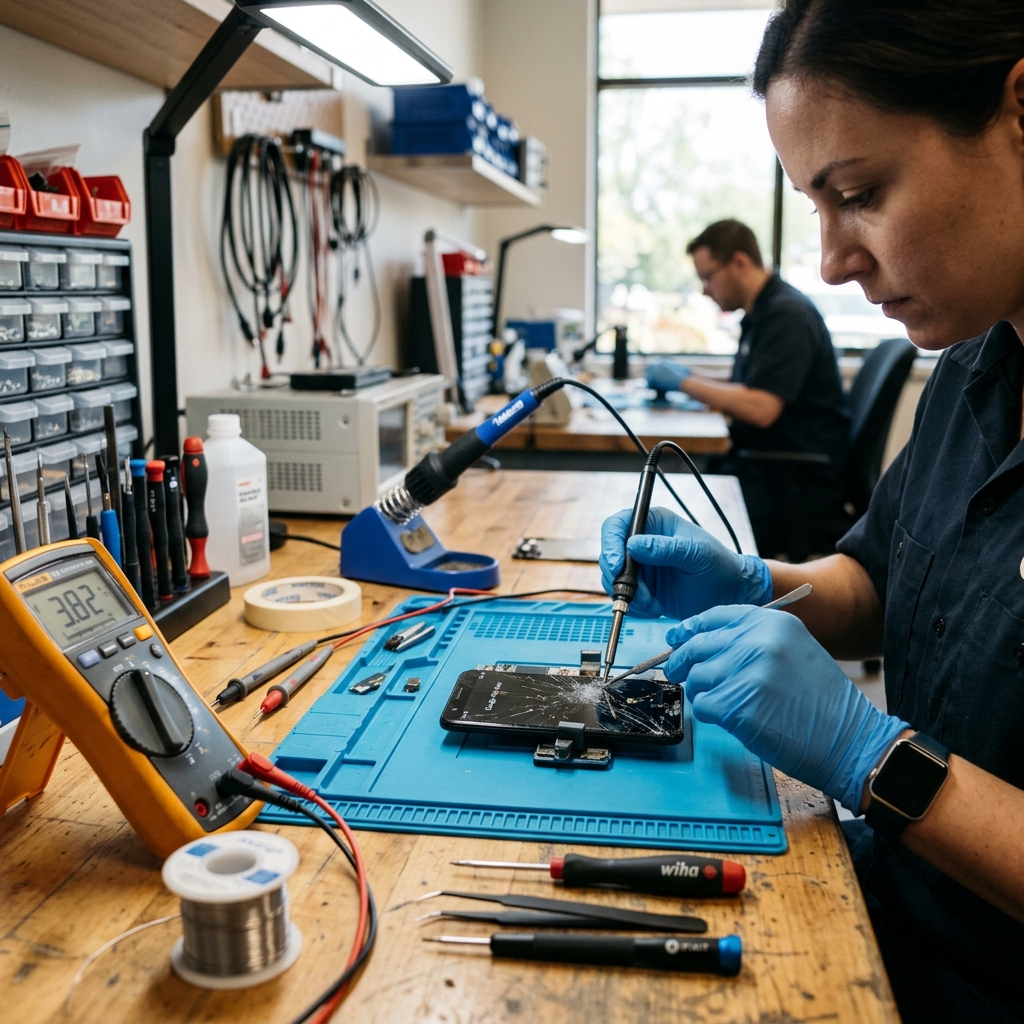
A used iPhone 13, 14, or 15 is worth keeping running in Patna, where the nearest Apple-authorised service is costly and not always nearby. So the real question is not just the price, it is what you keep after the repair: does Face ID survive, does True Tone come back, and does the part hold resale value. An iPhone 14 screen runs roughly Rs 7,500 to Rs 12,000 aftermarket here, a battery Rs 2,800 to Rs 6,500, and back glass Rs 2,500 to Rs 6,000 using laser removal, all far below Apple's out-of-warranty rates. This page gives the model-by-model numbers, then the iPhone-specific things a generic price list never explains: the three part grades, the Face ID and True Tone risks, and the Activation Lock step that delays half of all drop-offs.
What iPhone repair costs by model and part
Here are the 2026 figures from our Boring Road counter, confirmed in person after a free diagnosis. Screen price swings on the part grade (covered in the next section) and whether the panel is OLED-equivalent or a cheaper LCD copy.
| Model | Screen (aftermarket) | Battery | Back glass |
|---|---|---|---|
| iPhone 13 | Rs 6,500 – Rs 10,000 | Rs 2,800 – Rs 4,500 | Rs 2,500 – Rs 4,500 |
| iPhone 14 | Rs 7,500 – Rs 12,000 | Rs 3,500 – Rs 5,500 | Rs 3,000 – Rs 5,500 |
| iPhone 15 | Rs 9,000 – Rs 15,000 | Rs 4,000 – Rs 6,500 | Rs 3,500 – Rs 6,000 |
Original-grade service-pack displays for the Pro and Pro Max tiers cost more, up to Rs 22,000 or more at the top end. A Lightning or USB-C charging port starts at Rs 1,299, and a port that only needs a lint clean costs far less, so always ask for a diagnosis before agreeing to a full port swap. For every other brand and part, the Patna mobile repair price list has the full breakdown.
The three iPhone screen grades, and which to buy
Most shops talk about "original or copy" as if there are two options. For iPhones there are really three, and the price gap between them is the thing you are actually deciding. Knowing the grade you are buying is how you avoid paying original rates for a copy panel.
An aftermarket LCD copy is the cheapest, with weaker brightness and colour and a touch feel that flagship owners usually notice. A soft or hard OLED aftermarket panel costs more and looks close to the original, and is the sweet spot for most iPhone 13 and 14 owners keeping the phone another year or two. An original-grade service-pack display is a genuine-specification panel, the closest to factory, and the only one worth it if you plan to resell the phone as all-original or want the best possible result on a Pro. We name the grade and show you each price rather than fitting the cheapest panel and charging for the best. The deeper safety and quality detail is in is a third-party iPhone screen safe?.
Will the repair break Face ID?
A correct screen repair keeps Face ID working, because Face ID lives in the TrueDepth camera and dot projector at the top of the phone, not in the display itself. The danger is a careless one. During screen removal the Face ID flex cable can be torn, and once that specific cable or the dot projector is damaged, Face ID cannot be restored by any shop, including Apple, because the sensor is paired to your phone at the factory. This is the single most expensive mistake in cheap iPhone repair.
The safe method is to transfer your original top sensor assembly, the earpiece, the proximity sensor, and the Face ID flex, across to the new screen rather than using whatever came attached to the replacement panel. We do that transfer on every iPhone screen job, which is why Face ID survives. If a shop cannot explain how it handles the Face ID flex, that silence is your answer. Treat any "we will see after opening" about Face ID as a warning, not reassurance.
True Tone, brightness, and the non-genuine part notice
Fit an uncalibrated aftermarket screen and two things usually happen: True Tone disappears from Settings, and iOS shows an "unable to verify this display is genuine" notice. The phone still works, touch and brightness still function, but the automatic colour warmth of True Tone is gone unless the panel is programmed. A counter with the right tools can re-pair the new display so True Tone and auto-brightness behave normally again, and many budget shops skip this step because they lack the programmer.
The genuine-part notice itself is cosmetic, a service-status line in Settings, and it does not stop the phone working. It matters in exactly two cases: you intend to resell as fully original, or you may take the phone to Apple later. We tell you upfront whether a given panel keeps True Tone and whether it will show the notice, so the choice is yours before fitting, not a surprise afterward. The same logic applies to batteries, covered in iPhone battery health percentage explained.
Back glass: laser removal beats Apple's housing swap
Cracked rear glass is where the local route saves the most. Apple has historically treated iPhone 13 and 14 back glass as a full rear-housing job, a teardown that moves every component into a new chassis and runs Rs 14,000 and up. Confirm Apple's current rate on their own site, but the structure of that repair is what makes it expensive, not just the parts.
A laser machine softens the adhesive and lifts only the broken glass layer, leaving the housing and your components in place, so we replace the rear panel alone for a fraction of the housing-swap cost. The job is same-day for most models. The one honest caveat: on phones with heavy frame damage or a bent chassis, glass-only removal is not always possible, and we will say so at the counter rather than promise a clean result. The full comparison with worked numbers is in iPhone 14 back glass: Patna vs Apple.
Battery replacement and the health-calibration step
An iPhone battery swap costs more than an Android one because of the calibration, not just the cell. After fitting, the new battery has to be paired so iOS reports health correctly, and without that step you can see the same non-genuine notice and an inaccurate health percentage. A phone usually needs a new cell when maximum capacity falls below roughly 80 percent or it shuts down unexpectedly under load, which on heavy use lands around the two-year mark.
We fit a fresh certified cell and run the calibration so the health readout is meaningful, then test it under load before you collect the phone. If your worry is whether the battery actually needs replacing yet, read iPhone battery health percentage explained first, because sometimes the fix is a settings change, not a new battery. Battery work runs under our battery replacement service.
Turn off Activation Lock before you come
This is the step that delays more iPhone drop-offs than any other, and almost no competitor page mentions it. Before any repair, open Settings, tap your name, tap Find My, and switch off Find My iPhone, which clears Activation Lock. Back up to iCloud or a computer in the same sitting using our guide on how to back up your phone before a repair.
Activation Lock is Apple's anti-theft feature, and with it on, a technician cannot fully complete or test certain repairs, and cannot verify the phone afterward. A shop that offers to "bypass" Activation Lock without your Apple ID is a shop to walk away from, because that is the exact behaviour associated with stolen handsets. A legitimate counter asks you to turn it off yourself. Doing it before you travel turns a two-visit job into one.
Is repairing your iPhone worth it, or should you sell?
Weigh the repair against what the phone fetches used in Patna. A reasonable line is 40 percent: if a single repair costs less than about 40 percent of the phone's resale value, fixing it usually wins. An Rs 8,000 screen on an iPhone 13 still worth around Rs 30,000 used is an easy yes. The maths flips when faults stack.
A water-damaged iPhone with Face ID failure plus a cracked screen can climb past Rs 15,000 once you add the board work, and against an older iPhone's value that rarely makes sense. The cleanest replace-not-repair signals are a dead Face ID sensor, heavy board corrosion from liquid, and any phone four or more years old needing two major parts at once. We diagnose first and tell you plainly when the repair outruns the phone, the same honest-maths approach in should you repair or replace your phone. If you are buying used instead, the second-hand iPhone Patna checklist covers what to inspect.
Booking and what to bring
Bring the iPhone with Activation Lock already off and a recent backup done, and walk in for a free diagnosis at our Boring Road counter, where the diagnostics are led by Ravish Pandey, an IPC-7711 certified technician, with liquid and board-level work handled by Vishwas Kumar. We name the part grade, show you the price, and put a written warranty on the job before anything is opened. Screen and back glass run through our screen replacement service; for a quote on your exact model before you travel, use the contact page.
Related iPhone guides: is a third-party iPhone screen safe? · iPhone 14 back glass: Patna vs Apple · iPhone battery health percentage explained · second-hand iPhone Patna checklist